What Spire’s soil moisture forecast revealed before Cyclone Ditwah hit Sri Lanka
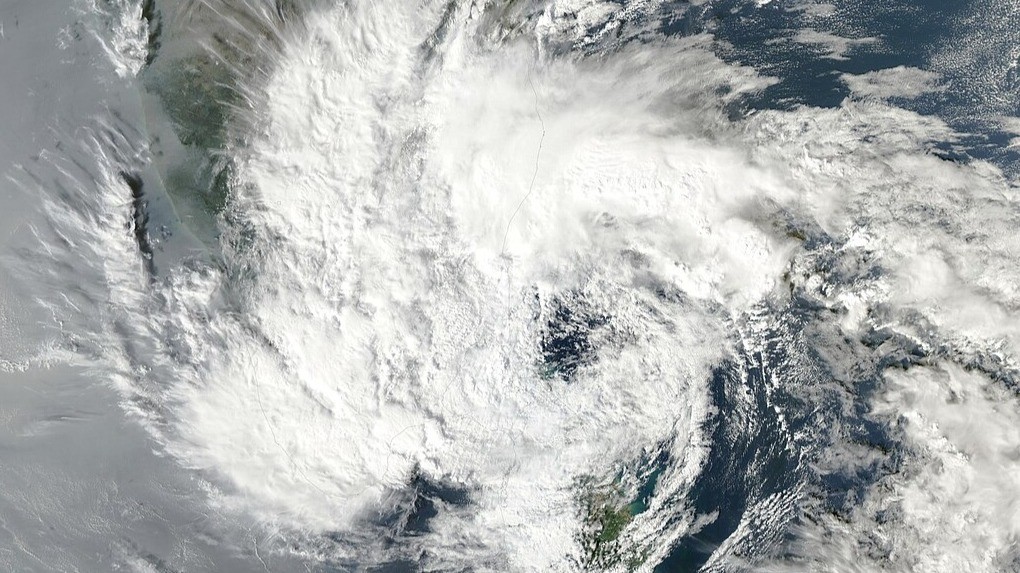
Figure 1:Satellite imagery of Cyclone Ditwah approaching Sri Lanka, November 2025. Credit: NASA MODIS.
Soil moisture conditions prior to extreme weather events strongly influence impacts such as flooding, landslides, and crop damage. Elevated pre-event soil moisture increases runoff potential, while unusually dry conditions can mask the severity of approaching hazards. Forecast and anomaly analyses can reveal these precursors days or weeks in advance, providing valuable situational awareness for emergency planning, resource allocation, and risk management.
The disaster
Cyclone Ditwah devastated Sri Lanka in late November 2025, killing at least 640 people and affecting over 2 million residents — roughly 10% of the population. The government declared a national emergency, with 22 of 25 districts designated as disaster zones. United Nations analysis revealed floodwaters inundated nearly 20% of Sri Lanka’s land area, exceeding 1.1 million hectares, causing widespread damage to homes, infrastructure, and agriculture.
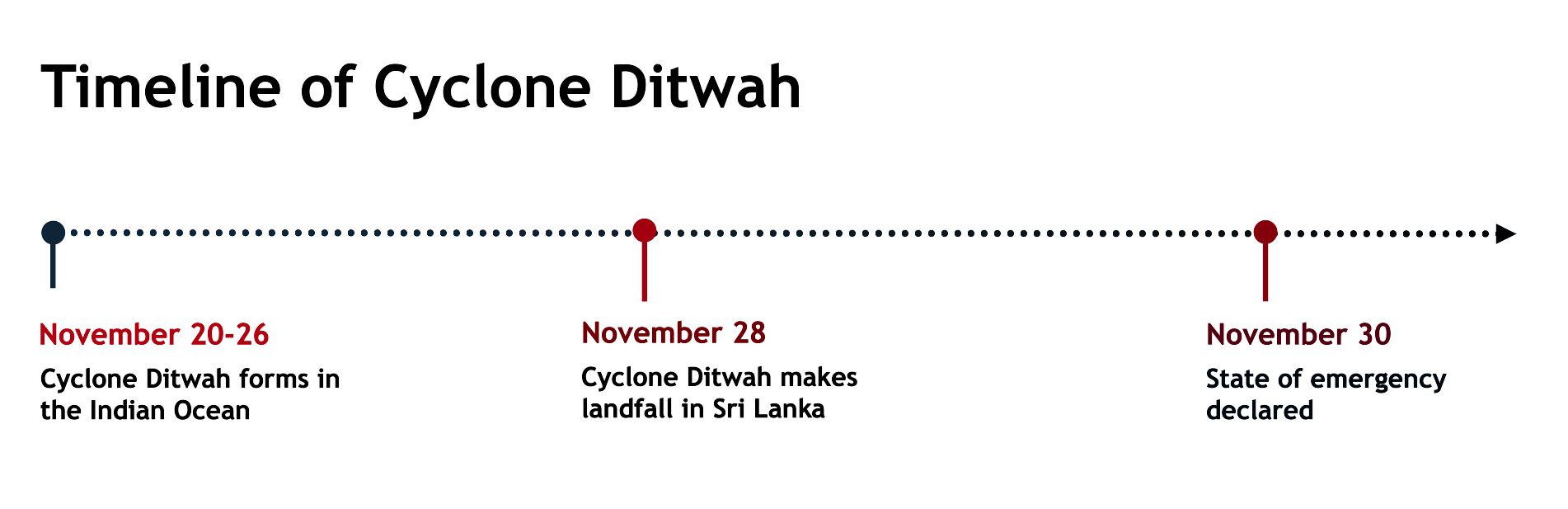
Figure 2:Timeline of Cyclone Ditwah: formation in the Indian Ocean (20–26 November), landfall in Sri Lanka (28 November), and declaration of a state of emergency (30 November).
Pre-event soil moisture conditions
Analysis of soil moisture data from the month before Cyclone Ditwah showed largely moderate soil moisture conditions across Sri Lanka, with no widespread zones of elevated saturation. Several regions appeared drier than historical averages, establishing a critical baseline for understanding what followed.
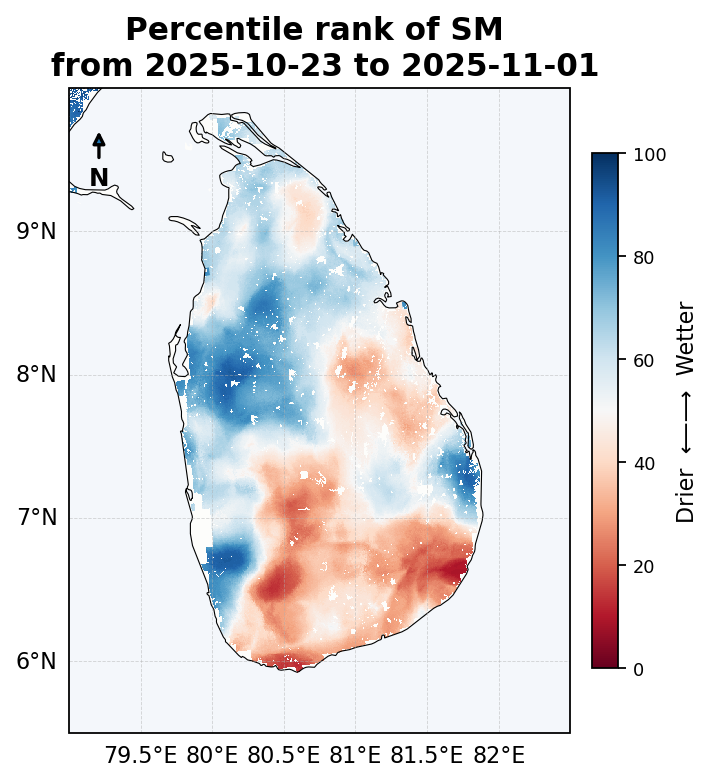
Figure 3:Soil moisture percentile rank over Sri Lanka, 23 October – 1 November 2025. Mixed conditions with drier-than-normal areas (red) in the south and wetter areas (blue) in the north, indicating no widespread pre-event saturation.
Forecast accuracy
Spire generated a soil moisture forecast on 27 November 2025 — one day before landfall — that successfully predicted rapid escalation in soil saturation levels. When compared to near-real-time observations during the cyclone, the forecast aligned with actual conditions showing extreme wet anomalies, with some areas reaching the 100th percentile (the wettest conditions recorded in the past decade).
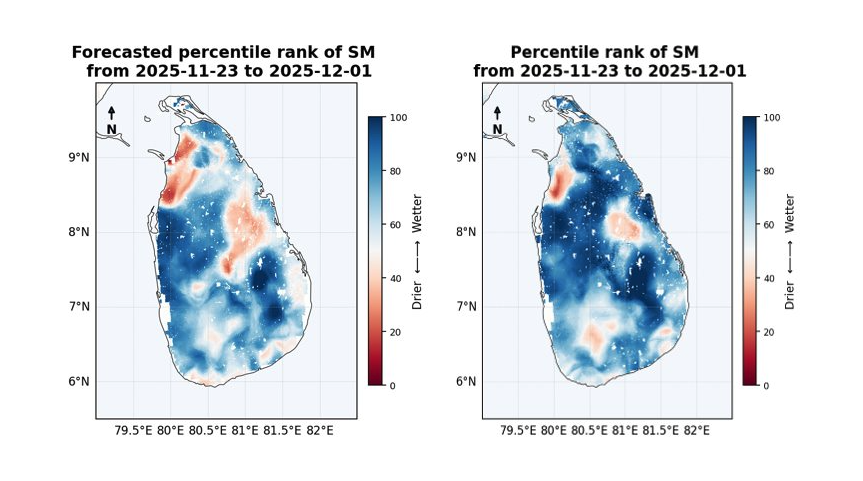
Figure 4:Forecast (left) versus observed (right) soil moisture percentile rank over Sri Lanka, 23 November – 1 December 2025. Both show extreme wet anomalies across nearly the entire island, with many areas reaching the 100th percentile.
Key finding
The contrast between mixed pre-cyclone conditions, including areas that were drier than normal, and the rapid shift to near-record saturation highlights the critical role of soil moisture in flood risk assessment. At 500 m resolution, the data show how already saturated soils can turn moderate precipitation into severe flooding.
Operational value
This case study illustrates the value of soil moisture forecasts with up to 14-day lead times for disaster preparedness, flood-risk planning, agricultural protection, and infrastructure resilience. Products used in this analysis include:
D-ESSM (500 m) — near-real-time observations
Soil moisture forecast — predictive estimates
Soil moisture anomalies — comparison with historical climatology
Originally published on LinkedIn.